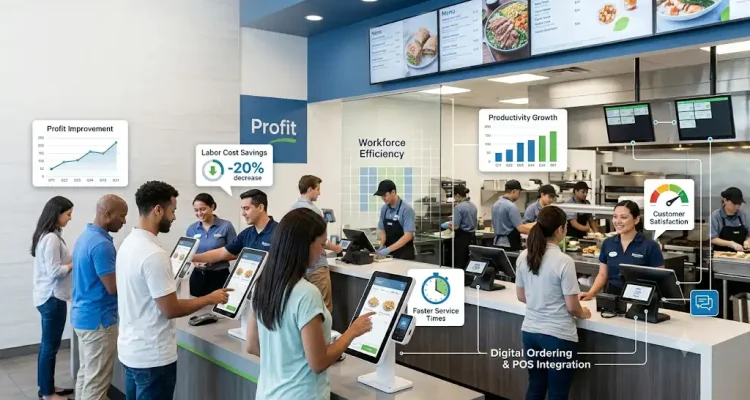
As businesses continue to adopt digital transformation, many are investing in a self service kiosk to streamline operations and enhance the customer experience. Restaurants, retail stores, supermarkets, hospitals, and transportation hubs increasingly rely on self service technology to handle routine transactions more efficiently.
Despite its growing popularity, one question remains common among business owners: Does a self service kiosk replace employees, or does it actually increase business profitability?
The answer is more nuanced than simply reducing headcount. When implemented strategically, a self service kiosk allows employees to focus on higher value tasks while improving operational efficiency and customer satisfaction.
Why Businesses Are Adopting Self Service Kiosks
Consumer expectations continue to evolve. Customers increasingly expect faster service, shorter waiting times, and greater convenience.
A self service kiosk enables customers to place orders, make payments, check information, or complete registrations independently without waiting for staff assistance.
This automation helps businesses deliver a smoother customer journey while optimizing internal operations.
Improving Workforce Efficiency
One of the biggest advantages of a self service kiosk is improving workforce efficiency rather than simply replacing employees.
Instead of assigning staff to repetitive tasks such as order taking or payment processing, businesses can redeploy employees to responsibilities that require human interaction, including:
- Customer assistance.
- Product recommendations.
- Problem resolution.
- Inventory management.
- Quality control.
By shifting employees to higher value activities, businesses can improve overall service quality while maintaining operational flexibility.
Reducing Operational Costs
Labor expenses represent one of the largest operating costs for many businesses.
A self service kiosk helps reduce operational costs by automating repetitive processes, allowing existing staff to manage larger customer volumes without significantly increasing payroll expenses.
Potential cost saving benefits include:
- Reduced overtime expenses.
- Lower recruitment costs.
- Shorter employee training time for repetitive tasks.
- More efficient workforce allocation.
- Faster transaction processing.
Rather than eliminating employees, many businesses use these savings to invest in business expansion, technology upgrades, or customer experience improvements.
Increasing Productivity Across Operations
Productivity improves when routine transactions no longer depend entirely on employee availability.
With a self service kiosk, customers can complete transactions simultaneously while employees focus on operational priorities.
Productivity improvements may include:
- Faster customer throughput.
- Shorter waiting lines.
- Higher transaction accuracy.
- Increased order capacity during peak hours.
- Reduced manual data entry.
This combination allows businesses to serve more customers without proportionally increasing staffing levels.
Case Study Example
Consider a quick service restaurant that serves approximately 400 customers each day.
Before implementing a self service kiosk:
- Four cashiers handled customer orders.
- Average ordering time was approximately three minutes per customer.
- Long queues frequently developed during lunch and dinner hours.
After introducing two self service kiosks:
- Customers could place orders independently.
- Average ordering time dropped significantly.
- Cashiers shifted their focus to customer assistance and order fulfillment.
- Queue lengths decreased during peak periods.
- Order accuracy improved because customers entered their own selections.
As a result, the restaurant increased customer capacity without hiring additional employees while improving the overall customer experience.
Although actual results vary depending on business size and industry, many organizations report measurable improvements in operational efficiency after adopting self service technology.
Does a Self Service Kiosk Replace Employees?
A common misconception is that a self service kiosk exists solely to replace workers.
In reality, successful businesses use automation to complement their workforce rather than eliminate it.
Employees continue to play essential roles in:
- Customer engagement.
- Handling special requests.
- Resolving complex issues.
- Maintaining equipment.
- Managing inventory.
- Delivering personalized service.
Technology performs repetitive tasks, while employees contribute skills that automation cannot replace.
Is a Self Service Kiosk Right for Your Business?
A self service kiosk is particularly beneficial for businesses that:
- Experience high customer traffic.
- Handle repetitive transactions.
- Face increasing labor costs.
- Want to reduce waiting times.
- Plan to improve customer experience.
- Aim to increase operational efficiency.
Industries that commonly benefit include:
- Restaurants.
- Cafés.
- Retail stores.
- Supermarkets.
- Healthcare facilities.
- Hotels.
- Transportation services.
- Entertainment venues.
Best Practices for Successful Implementation
To maximize the return on investment, businesses should:
- Select intuitive kiosk software.
- Integrate the kiosk with the POS system.
- Train employees to support customers.
- Monitor customer usage and feedback.
- Perform regular software maintenance.
- Keep the user interface simple and accessible.
These practices help businesses achieve long term success while maximizing the benefits of automation.
Conclusion
A self service kiosk is not simply a tool for reducing labor costs. Its greatest value lies in improving workforce efficiency, lowering operational expenses, increasing productivity, and creating a better customer experience.
When implemented strategically, a self service kiosk enables businesses to optimize resources, support business growth, and increase profitability without compromising service quality.